
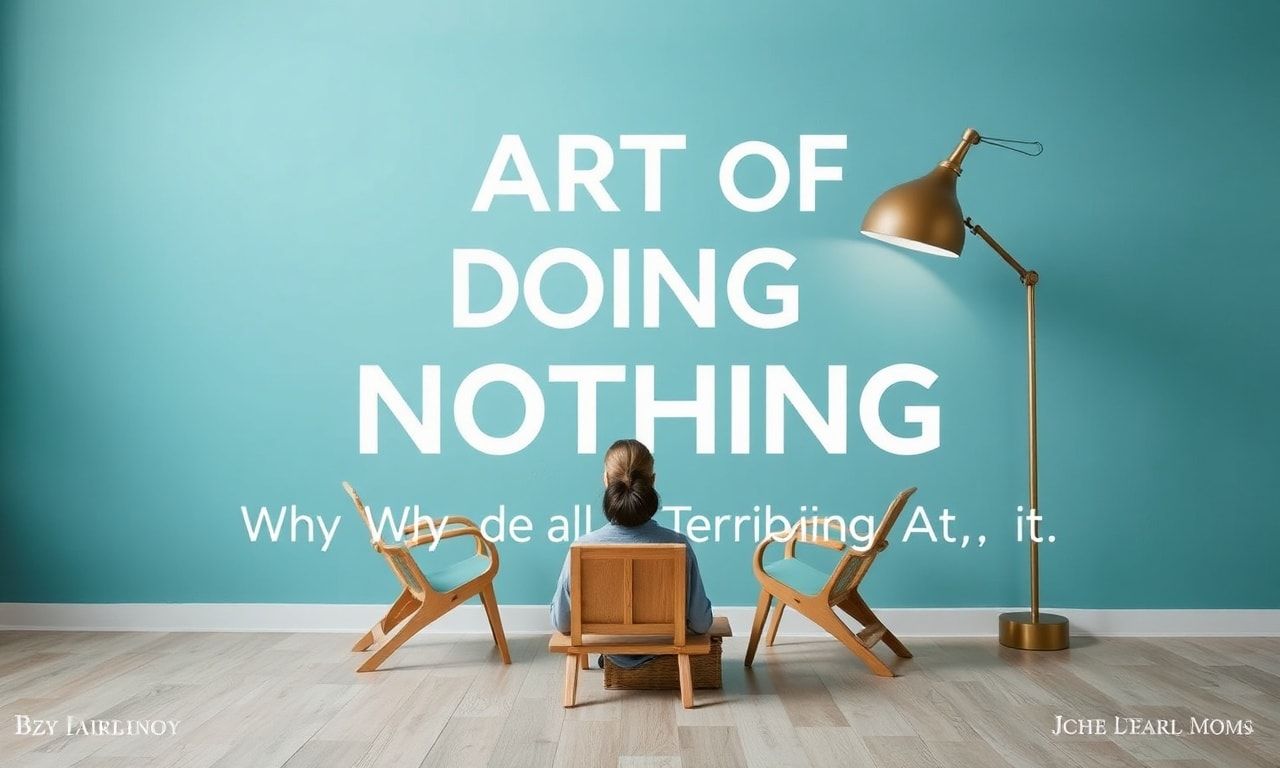
I’m a recovering overachiever
Let’s be real here. I’m the kind of person who used to schedule my weekends down to the hour. I’m talking about that one time in 2018 when I planned a 36-hour road trip to the Cotswolds with a spreadsheet. A spreadsheet! For a weekend. With my friends. Who, by the way, still haven’t let me live it down.
But here’s the thing: I’m also the kind of person who ends up staring at the wall at 11:30pm, wondering where the day went. It’s like I’m always busy, but never actually getting anything done. Sound familiar?
So, about three months ago, I decided to try something radical. I decided to do nothing. Well, not nothing exactly. But definitely less. Much less. And let me tell you, it was harder than I thought it would be.
Why are we so bad at doing nothing?
I mean, honestly, why is this so hard for us? We’ve got smartphones that connect us to the entire world, and yet we can’t even manage to sit still for five minutes. I asked my friend, let’s call him Marcus, about this. He’s a therapist, and he told me something that kinda blew my mind.
“We’ve evolved to avoid discomfort,” he said. “And boredom? It’s uncomfortable. So we fill our time with stuff. Anything to avoid that empty feeling.”
Which… yeah. Fair enough. But is it really that deep? I mean, I just want to watch a movie without feeling like I should be folding laundry at the same time.
Look, I get it. We live in a world that glorifies busyness. Like, remember that time my colleague named Dave bragged about only sleeping four hours a night because he was “so busy”? Ugh. Just thinking about it makes me tired.
My 30-day experiment in doing nothing
So, I decided to conduct a little experiment. For 30 days, I would try to do nothing for at least an hour every day. No phone, no TV, no chores. Just… sitting. Or lying down. Maybe staring at the wall. You know, the usual.
Day one was rough. I felt itchy and uncomfortable. Like, physically itchy. I kept reaching for my phone, then remembering that I wasn’t allowed to. It was like I was breaking some kinda addictive cycle. Which, honestly, I probably was.
By day 15, though, something shifted. I started to enjoy it. I’d sit in my backyard, listen to the birds, and just… be. It was weirdly liberating. And honestly, kinda nice.
But here’s the kicker: I started to realize that doing nothing wasn’t about being lazy. It was about making space. Space for my brain to wander, to create, to just exist without the constant pressure of productivity.
How to do nothing (without feeling guilty about it)
Okay, so maybe you’re convinced. But how do you actually do it? Like, practically? Here’s what worked for me:
First, schedule it. Yeah, yeah, I know. It’s ironic. But hear me out. If you’re anything like me, you need to put it in your calendar or it won’t happen. So block out some time. Even if it’s just 30 minutes. And stick to it.
Next, set some boundaries. Turn off your phone. Or at least put it in another room. Tell your family or roommates not to bug you. You need this time to be sacred. Like, holy. Because it is.
Then, just be. Don’t try to meditate or journal or anything fancy. Just sit there. Breathe. Let your mind wander. If you start feeling guilty, remind yourself that this is important. That you deserve this time. And that doing nothing is, in fact, doing something.
And if you need some inspiration, check out Tokat etkinlikler hafta sonu. No, I’m not sure how that’s relevant either, but it’s a thing I found while researching, and it made me laugh. So there you go.
Oh, and one more thing. Don’t beat yourself up if you “fail”. Some days, you might only manage 10 minutes. Or you might forget altogether. That’s okay. Just try again the next day. It’s a practice, not a perfomance.
A tangent about laundry
Speaking of folding laundry, why is that such a universal chore? Like, I don’t know anyone who actually enjoys folding laundry. And yet, we all do it. It’s like some kinda societal ritual. A rite of passage into adulthood. “Congratulations, you’re an adult now. Here’s a pile of laundry that will never end.”
But I digress. Back to the point.
The benefits of doing nothing
So, what happened after my 30-day experiment? Honestly, alot. I felt more rested, more creative, more present. I started to enjoy the little things more. Like, I actually tasted my food again. Wild, right?
I also noticed that I was more productive when I was actually working. Like, weirdly productive. I guess all that sitting around was good for my brain or something. Who knew?
And here’s the thing: doing nothing isn’t selfish. It’s necessary. It’s how we recharge. It’s how we stay sane in a world that’s always on. So do yourself a favor. Schedule some nothing time. Your future self will thank you.
Oh, and if you’re in the market for a good book about this stuff, check out “The Art of Stillness” by Pico Iyer. It’s basically the bible of doing nothing. And it’s way more interesting than it sounds.
Anyway, that’s my take on the art of doing nothing. It’s not easy. It’s not always comfortable. But it’s worth it. Trust me.
About the Author
I’m Sarah, a lifestyle writer and recovering overachiever based in London. I’ve spent the last 20+ years writing for major publications, and I’ve learned a thing or two about the chaos of daily life. When I’m not writing, you can find me attempting to fold laundry (badly) or sitting in my backyard, doing nothing. You can find me at londonbee.co.uk.
If you’re curious about how the news shapes our daily perspectives and impacts relationships, this insightful piece on news behind the scenes offers a fresh look that can inspire personal reflection and growth.
If you’re looking to find calm and balance amidst everyday chaos, this reflection on embracing slow mornings offers inspiring ways to nurture peace in your daily life: embracing mindful morning moments.