
Greece’s Lost Village Emerges from the Depths: A Sign of Climate Change’s Impact
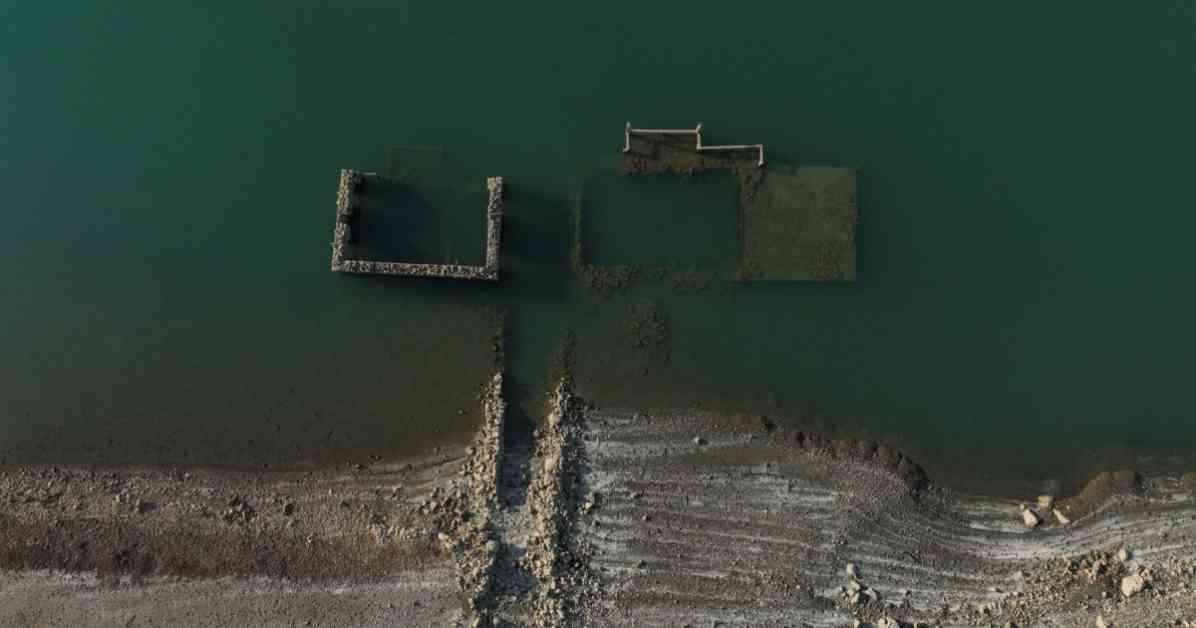
As temperatures soar and drought grips Greece, an unusual sight has emerged from the depths of the country’s main reservoir – the sunken village of Kallio. This submerged village, sacrificed in the 1980s to create a reservoir to supply water to the Greek capital, Athens, is now reappearing as water levels drop to alarming lows.
The village of Kallio, with around 80 homes, a church, and a local primary school, was intentionally flooded decades ago to ensure a steady water supply for Athens. However, the recent record-breaking temperatures and prolonged drought have caused water levels in the reservoir to plummet by approximately 30%, leaving the remains of the submerged village exposed.
A Bellwether for Dwindling Water Supplies
The emergence of the sunken village of Kallio serves as a stark reminder of the dwindling water supplies in the area. Apostolis Gerodimos, president of the Kallio community, notes that sightings of the buildings act as a sign of low water supplies. He recalls a similar drought in 1993, which was eventually alleviated by winter rains. However, this time, the situation is becoming dire as the water levels continue to drop without sufficient replenishment.
Dimitris Giannopoulos, the mayor of the broader Dorida municipality, expresses concern over the unprecedented water shortage, emphasizing that such conditions have not been seen in over three decades. With Mount Giona overlooking the lake devoid of snow, and surrounding trees turning yellow from lack of water, the effects of climate change on the region are becoming increasingly evident.
Impact of Climate Change on Water Resources
Greece’s arid Mediterranean climate has made it particularly susceptible to the effects of global warming, exacerbating summer wildfires and extreme heatwaves. Scientists attribute the decline of the lake to extreme weather patterns linked to climate change, leading to drying wells, water cuts in surrounding villages, and heightened wildfire risks in the region.
Former residents of Kallio, witnessing the reemergence of their once-submerged village, express mixed emotions of surprise and sadness at its current state. The shrinking surface area of the lake, as depicted in satellite images, underscores the severity of the water crisis, with water reserves in the region dwindling rapidly.
Prayers for a Wet Winter
As residents and officials grapple with the water shortage, hopes are pinned on a wet winter to replenish the water supplies in the area. The state-run Athens water company, EYDAP, has initiated measures to augment the water network with additional sources, but the ultimate solution lies in nature’s ability to bring much-needed rainfall and snowfall to the region.
Looking Ahead: Climate Change Adaptation and Mitigation
The emergence of the sunken village of Kallio serves as a poignant reminder of the urgent need for climate change adaptation and mitigation strategies in Greece and beyond. With extreme weather events becoming more frequent and severe, it is imperative for governments, communities, and individuals to prioritize sustainability, water conservation, and resilience in the face of environmental challenges.
Subheadings:
The Resurfacing of Kallio Village: A Symbol of Climate Change Impact
Challenges of Dwindling Water Supplies in Greece
Climate Change and the Urgency for Adaptation
Conclusion:
The reemergence of the sunken village of Kallio in Greece’s main reservoir serves as a powerful testament to the far-reaching impacts of climate change on water resources and communities. As the region grapples with unprecedented water shortages and environmental challenges, it is crucial for stakeholders to work together towards sustainable solutions that safeguard our natural heritage for future generations. May the lessons learned from Kallio village’s resurfacing serve as a wake-up call to prioritize climate action and conservation efforts worldwide.