
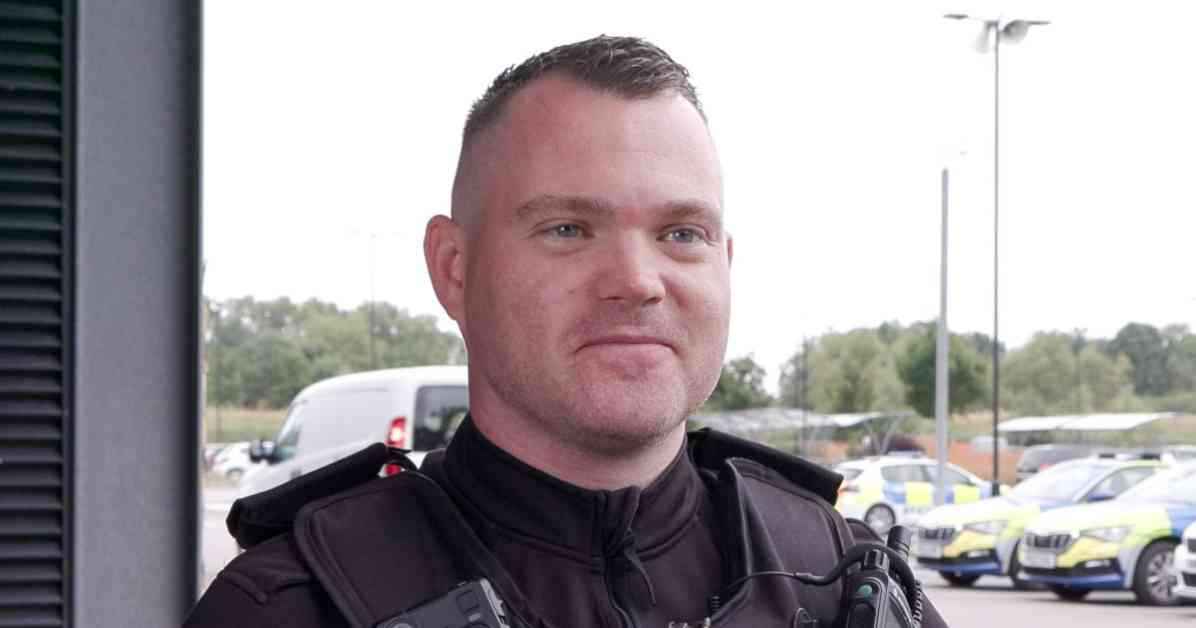
Police Officer’s Terrifying Encounter with Attacker: A Fight for Survival
In a harrowing incident that took place in Blackpool, Lancashire, PC Ashley Aspinall found himself in a fight for survival after being viciously attacked by a drunk man. The attack, which occurred on April 7 last year, left Ashley with severe injuries that required him to spend 11 days in the hospital and four months off work before he could return to policing.
The Assault and Aftermath
The attack took place when Ashley and one of his colleagues attempted to arrest Ian Scott, 50, who had been kicked out of a bar in Blackpool. However, the situation quickly escalated, leading to Ashley being rendered unconscious on the pavement with Scott on top of him. As Ashley lay on the ground, blood pouring out of his head, Scott continued to abuse him in a terrifying display of violence.
During his time in the hospital, Ashley recounted the overwhelming fear he experienced as he grappled with the severity of his injuries. The paramedics who first treated him expressed deep concern over the extent of his head injury, with one paramedic even admitting that they would have called for helicopter medical assistance if the incident had occurred during the day. Ashley’s struggle to comprehend the situation was evident as he tried to communicate with his colleagues, calling them by the wrong names due to his brain not functioning properly.
Emotional Impact and Recovery
The emotional toll of the assault on Ashley was significant, with the officer admitting that he was convinced he was going to die during the attack. Only thoughts of his daughter and the future milestones he hoped to share with her kept him fighting through the excruciating pain and mental anguish. The trauma of the incident lingered long after Ashley’s physical wounds had healed, as he grappled with the emotional aftermath of the assault.
To this day, Ashley remains haunted by the assault, constantly questioning if there was anything he could have done to prevent the attack. Despite following police protocols and policies, including the five-step appeal process, Ashley still struggles to understand what triggered such a brutal assault. His colleagues, who witnessed the attack that evening, continue to receive support as they come to terms with the shocking events that unfolded before them.
Legal Consequences and Closure
In a small semblance of justice, Ian Scott later pleaded guilty to a section 20 wounding of an emergency service worker. Despite the severity of his actions, Scott was given a lenient 24-month suspended sentence and ordered to pay £1,500 in compensation. Additionally, he was required to complete a 120-day alcohol abstinence program, 15 rehabilitation activity requirement days, and undertake 200 hours of unpaid work as part of his sentence.
Moving Forward
As Ashley navigates the aftermath of the attack and continues to recover, the impact of the incident serves as a stark reminder of the dangers faced by frontline emergency service workers. The resilience and bravery displayed by officers like Ashley in the face of such harrowing situations highlight the sacrifices they make to protect and serve their communities.
In Conclusion
The story of PC Ashley Aspinall’s terrifying encounter with his attacker serves as a sobering reminder of the risks faced by police officers in the line of duty. The physical and emotional toll of such an assault reverberates long after the wounds have healed, underscoring the need for greater support and protection for emergency service workers. As Ashley continues to heal and rebuild his life in the aftermath of the attack, his story stands as a testament to the resilience and courage of those who put themselves in harm’s way to keep others safe.